
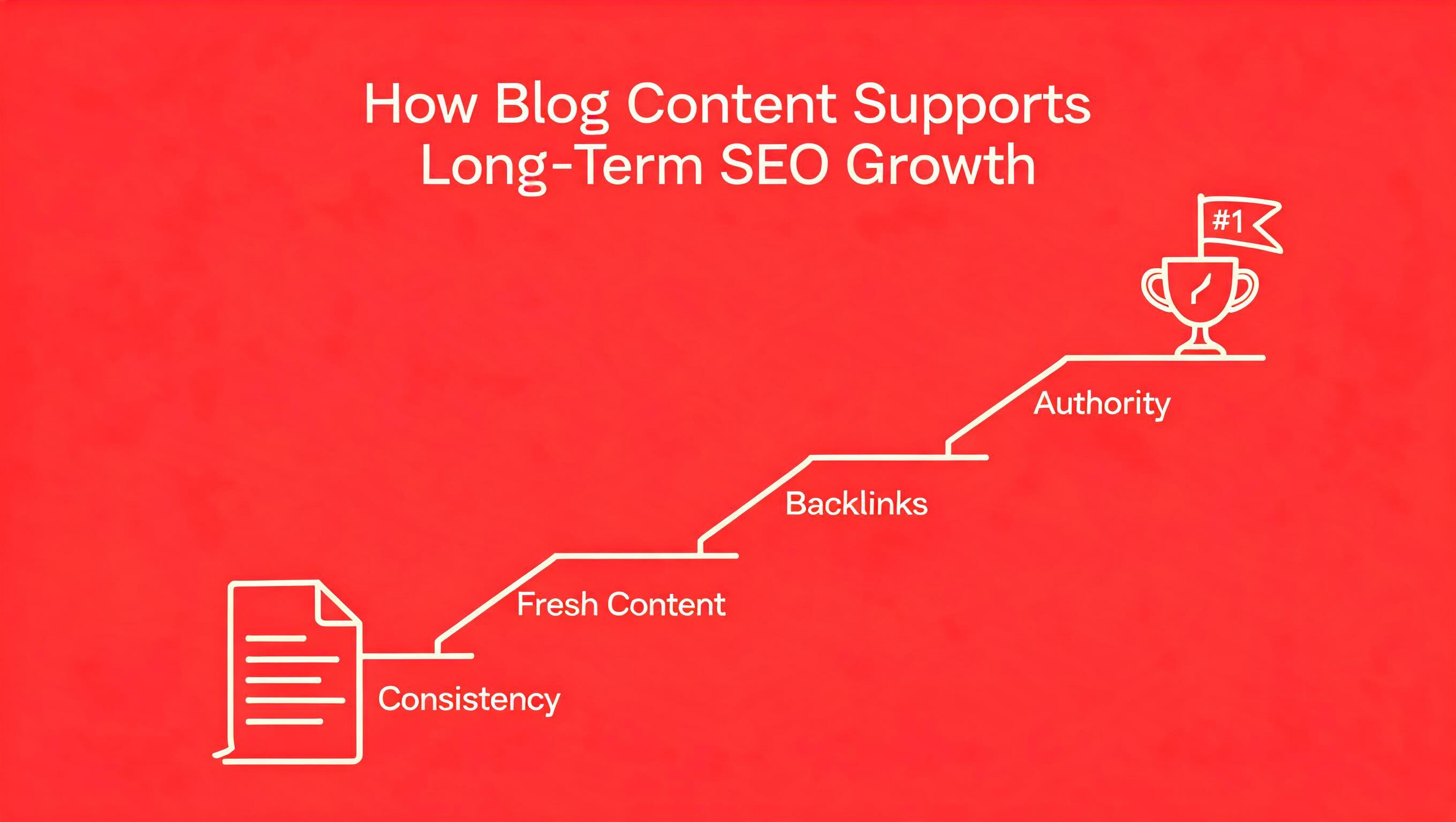
Many businesses treat blogging as a short-term traffic tactic, but its real value shows up over months and years, not days. Unlike paid ads that stop working the moment you stop paying, blog content keeps working long after it's published. It quietly builds authority, attracts backlinks, and continues ranking for relevant searches. Understanding how this compounding effect works is key to using blog content as a long-term SEO growth engine rather than a one-time traffic spike.
Why Blog Content Is a Long-Term SEO Asset
1. It Builds a Growing Library of Indexed Pages
Every blog post is a new page search engines can index and rank. Over time, a consistent publishing schedule creates a large library of content covering many keywords and topics. This expanding footprint increases the number of ways people can discover your website through organic search, compounding your visibility month after month.
2. It Establishes Topical Authority Over Time
Search engines favor websites that demonstrate deep, consistent expertise in a subject area. A single article rarely proves authority, but dozens of well-researched posts on related topics, published over time, signal to search engines that your site is a trusted, ongoing resource. This authority often leads to better rankings even for newer content you publish later.
3. It Naturally Attracts Backlinks
High-quality, informative blog posts are more likely to be referenced and linked to by other websites, journalists, and industry blogs. Backlinks remain one of the strongest ranking factors, and older, well-established blog posts often accumulate links gradually over years, strengthening your domain authority without any additional effort.
4. It Compounds Organic Traffic
Unlike a paid campaign that stops the moment the budget runs out, a blog post can continue driving traffic indefinitely once it ranks. As you publish more content, older posts continue pulling in visitors while newer posts start ranking too, creating a cumulative traffic effect that grows larger the longer you consistently publish.
5. It Supports Keyword Expansion
As your blog grows, you naturally begin targeting a wider range of keywords, including long-tail variations that are easier to rank for. This gradual keyword expansion helps you capture search intent at every stage of the buyer journey, from early research questions to more specific, purchase-ready queries.
How to Use Blog Content for Long-Term SEO Growth
Step 1: Publish Consistently, Not Just Frequently
Consistency matters more than volume. A steady publishing schedule, even if it's just one or two high-quality posts a week, builds momentum over time and signals to search engines that your site is active and regularly updated.
Step 2: Focus on Evergreen Topics
While trending topics can bring short bursts of traffic, evergreen content that answers timeless questions continues to attract visitors for years. Balance your content calendar with a mix of both, but prioritize evergreen topics for sustained results.
Step 3: Update and Refresh Old Posts
SEO isn't just about publishing new content — refreshing older posts with updated information, new keywords, and improved structure can significantly boost their rankings without starting from scratch.
Step 4: Interlink Your Blog Posts
Linking related blog posts together helps search engines understand the relationship between your content and keeps readers engaged longer, both of which support better long-term rankings.
Step 5: Track Performance and Double Down on What Works
Use analytics to identify which blog posts consistently drive traffic and conversions. Understanding these patterns helps you create more content that resonates with your audience and performs well in search.
Common Mistakes That Slow Down Long-Term Growth
- Publishing inconsistently or abandoning the blog after a few months.
- Focusing only on trending topics with short shelf lives.
- Never updating or revisiting older, underperforming posts.
- Ignoring internal linking between related articles.
- Expecting immediate results instead of measuring growth over months.
Final Thoughts
Blog content is one of the few marketing investments that grows more valuable over time instead of losing value. By publishing consistently, prioritizing evergreen topics, and maintaining older posts, businesses can build a self-sustaining source of organic traffic that supports SEO growth for years to come. The key is patience — blogging is not a quick win, but a long-term compounding strategy that consistently pays off.