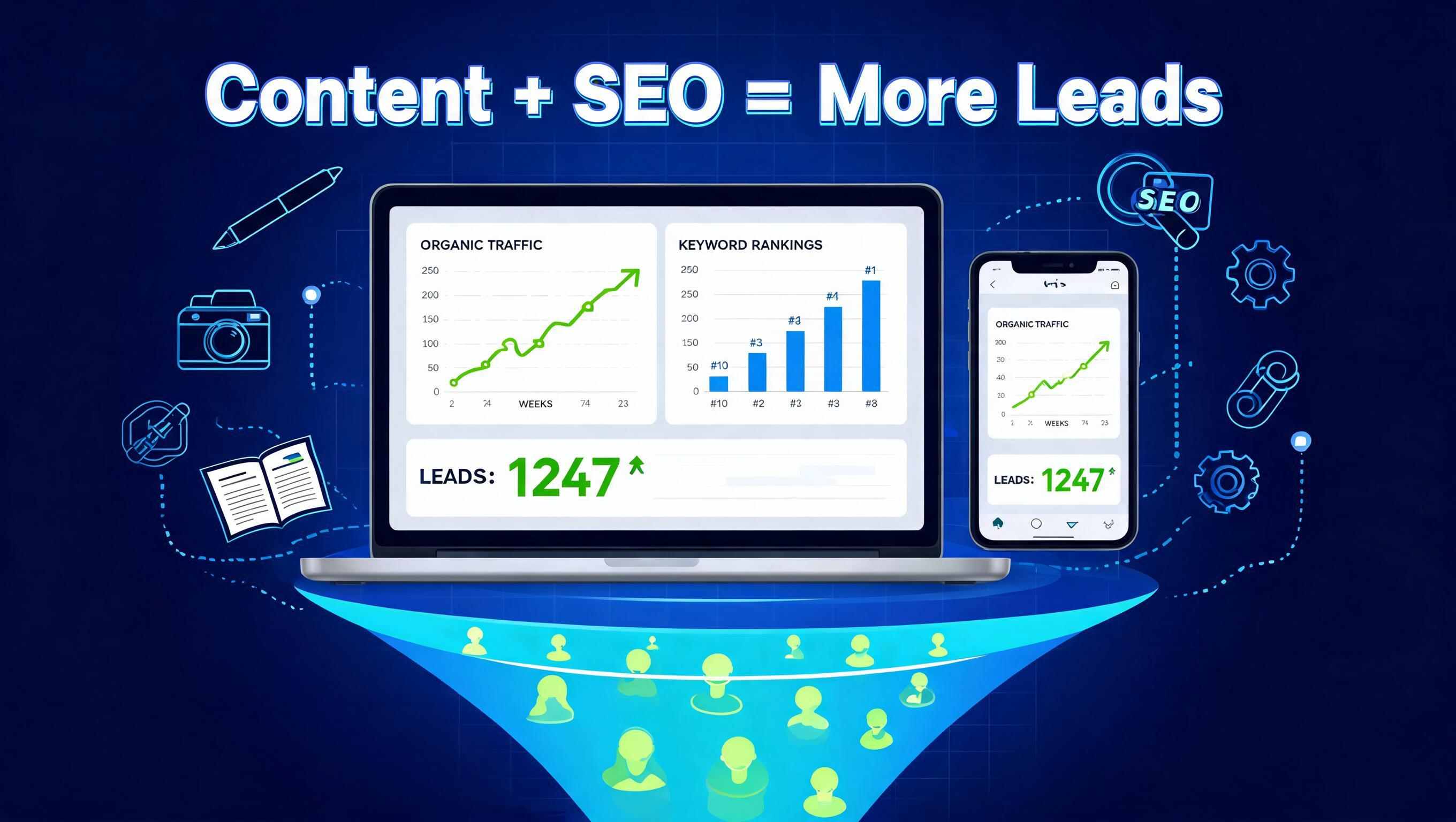
Content and SEO are often treated as two separate disciplines — one focused on creativity, the other on technical optimization. In reality, they are two halves of the same engine. Content gives search engines something worth ranking, and SEO gives that content a way to be found by the people who need it. When aligned correctly, this partnership becomes one of the most reliable, cost-effective ways to generate a steady stream of qualified leads. This blog explains exactly how content and SEO work together, and how you can build a system that turns organic search into a consistent lead generation channel.
1. SEO Brings the Right Traffic, Content Converts It
SEO's job is to get your pages in front of people actively searching for solutions. Content's job is to keep them there, answer their questions, and move them toward action. Neither works well alone.
- SEO without strong content leads to high bounce rates and poor rankings over time.
- Content without SEO struggles to get discovered, no matter how valuable it is.
- Together, they create a loop: better content improves rankings, and better rankings expose content to more of the right audience.
This is why lead generation strategies built on organic search always start with a content-SEO partnership, not one discipline working in isolation.
2. Keyword Research Shapes What You Create
Keyword research is the bridge between SEO and content. It tells you exactly what your audience is searching for, in their own words, at each stage of their buying journey.
- Target informational keywords for top-of-funnel blog content that builds awareness.
- Target comparison and evaluation keywords for middle-funnel content like guides and case studies.
- Target commercial and transactional keywords for bottom-funnel pages like product or service pages.
Mapping keywords to funnel stages ensures your content strategy isn't just about traffic volume — it's about attracting visitors who are genuinely close to becoming leads.
3. Search Intent Determines Content Format
Ranking well isn't just about using the right keywords — it's about matching what searchers actually want to see. Google rewards content that satisfies intent.
- Informational intent calls for how-to guides, explainers, and listicles.
- Commercial investigation intent calls for comparisons, reviews, and buyer's guides.
- Transactional intent calls for clear, benefit-driven landing and service pages.
When your content format matches intent, users stay longer, engage more, and are far more likely to take the next step — which search engines interpret as a positive ranking signal.
4. On-Page SEO Turns Good Content Into Findable Content
Even the most valuable content needs proper on-page optimization to perform in search results.
- Write clear, keyword-aligned titles and meta descriptions that improve click-through rates.
- Use structured headers (H1, H2, H3) to organize content for readers and search engines alike.
- Optimize images with descriptive alt text and compressed file sizes.
- Build internal links between related content to guide users deeper into your site.
On-page SEO is what makes your content discoverable; without it, even excellent writing can go unseen.
5. Content Earns the Backlinks That Boost Rankings
Backlinks remain one of the strongest ranking factors, and high-quality content is what earns them naturally.
- Original research, data studies, and industry reports attract citations from other websites.
- In-depth guides become reference material other creators link to.
- Well-promoted content increases the chances of organic shares and mentions.
As your domain authority grows through earned backlinks, all your content — including lead-generating pages — benefits from improved rankings.
6. Strategic CTAs Turn Organic Visitors Into Leads
Traffic alone doesn't generate leads — conversion opportunities do. Every piece of SEO-optimized content should guide readers toward a next step.
- Place relevant calls-to-action within and at the end of blog posts.
- Offer content upgrades like checklists or templates tied to the topic.
- Link high-traffic blog posts to related service or product pages.
- Use exit-intent popups or embedded forms for high-performing content.
The goal is to make the transition from reader to lead as natural and frictionless as possible.
7. Measuring Performance to Refine the Strategy
Content and SEO should be treated as an evolving system, not a one-time project. Regular measurement reveals what's actually driving leads.
- Track organic traffic, rankings, and engagement metrics by page.
- Monitor conversion rates on content pages to identify high-performing formats.
- Use search console data to find and fix content gaps or declining rankings.
- Update and refresh older content to maintain rankings and relevance over time.
This continuous feedback loop ensures your content-SEO strategy keeps improving rather than stagnating.
Final Thoughts
Content and SEO aren't competing strategies — they're partners in the same lead generation process. SEO ensures the right people find your content, and content ensures those people stay, engage, and eventually convert. By aligning keyword research, search intent, on-page optimization, and strategic calls-to-action, you can turn organic search into a predictable, scalable source of high-quality leads. The businesses that treat content and SEO as one integrated strategy — rather than separate departments — are the ones that build lasting organic growth.