
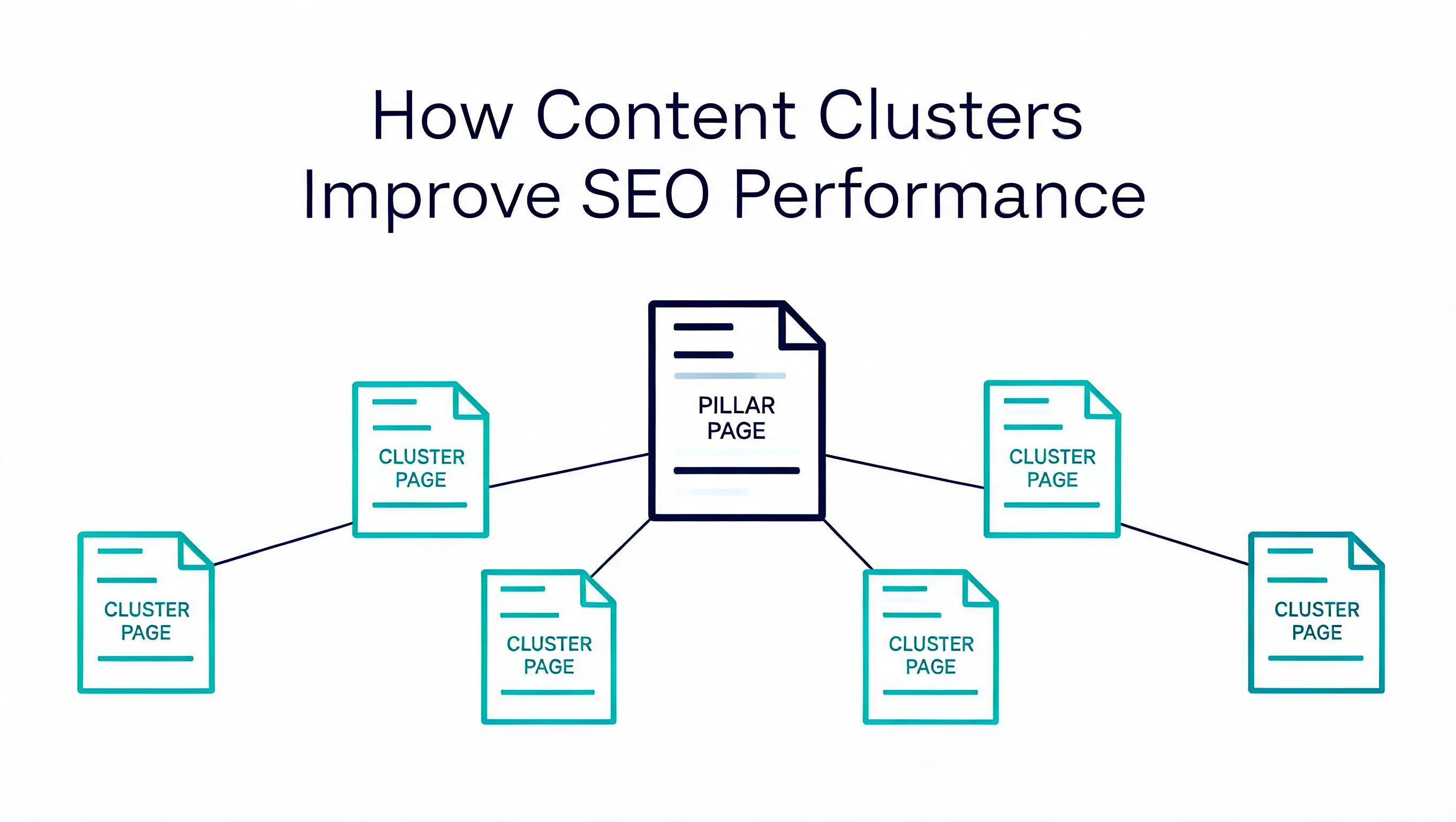
If you've been publishing blog posts for a while but still struggle to rank, the problem might not be your content quality — it might be your content structure. Search engines like Google no longer reward isolated, one-off articles as much as they reward organized clusters of related content. This is where content clusters come in, and understanding them can be a turning point for your SEO strategy.
What Are Content Clusters?
A content cluster is a group of interlinked articles built around one central topic, organized under a single "pillar page." The pillar page covers a broad topic in depth, while supporting articles (cluster content) dive into specific subtopics and link back to the pillar page.
For example, if your pillar page covers "Email Marketing," your cluster content might include articles on "Email Subject Line Best Practices," "How to Build an Email List," and "Email Automation Tools." Every cluster article links back to the pillar, and the pillar links out to each cluster piece, forming a web of topical relevance.
Why Content Clusters Matter for SEO
1. They Signal Topical Authority
Search engines use algorithms that evaluate not just individual pages, but how well a website covers a topic as a whole. When you build a cluster of interconnected content, you show search engines that your site is a comprehensive resource on that subject, not just a collection of random posts. This topical depth helps you rank for a wider range of related keywords, including long-tail variations you might not have targeted directly.
2. They Improve Internal Linking Structure
Internal links help search engine crawlers discover and index your pages more efficiently. A well-built cluster naturally creates a strong internal linking structure, since every cluster page links to the pillar and often to other related cluster pages. This distributes link equity across your site and helps newer or weaker pages gain authority faster.
3. They Reduce Keyword Cannibalization
Without a clear content structure, it's easy to accidentally publish multiple articles that target the same keyword, causing them to compete against each other in search results. Content clusters solve this by clearly defining which page owns which keyword or subtopic, so your pages support each other instead of competing.
4. They Enhance User Experience
Visitors who land on a cluster page can easily navigate to related content through internal links, keeping them engaged with your site longer. Lower bounce rates and longer session durations are positive user signals that can indirectly support better rankings.
5. They Make Content Planning Easier
Instead of guessing what to write next, a cluster model gives you a clear roadmap. Once you choose a pillar topic, you can brainstorm dozens of subtopics that naturally branch out from it, making your content calendar more strategic and less random.
How to Build an Effective Content Cluster
Step 1: Choose a Broad Pillar Topic
Pick a topic that is broad enough to support multiple subtopics but specific enough to stay relevant to your audience and business goals. This will become your pillar page.
Step 2: Research Subtopics and Keywords
Use keyword research tools to find related questions, long-tail keywords, and subtopics people search for around your pillar topic. These will become your individual cluster articles.
Step 3: Create the Pillar Page
Write a comprehensive, high-level overview of the topic. This page should be long-form and cover the topic broadly while linking out to more detailed cluster articles for readers who want to go deeper.
Step 4: Write Supporting Cluster Content
Each cluster article should focus on one specific subtopic in detail. Naturally link each cluster page back to the pillar page, and where relevant, link between cluster articles too.
Step 5: Monitor and Update Regularly
SEO isn't a one-time task. Track how your cluster performs using analytics tools, identify underperforming pages, and refresh content periodically to keep it accurate and competitive.
Common Mistakes to Avoid
- Creating cluster content without a clear pillar page to anchor it.
- Overlapping keywords between cluster articles, causing internal competition.
- Forgetting to update internal links when publishing new cluster content.
- Writing pillar pages that are too shallow to support in-depth clusters.
- Neglecting to promote and build backlinks to the pillar page specifically.
Final Thoughts
Content clusters are more than an organizational tactic — they're a fundamental shift in how modern SEO works. By building topical authority, strengthening internal linking, and improving user experience, content clusters help both search engines and readers understand the true value of your website. If you want long-term, sustainable SEO growth, structuring your content around clusters isn't optional anymore — it's essential.