Every day, millions of people turn to Google to find answers, compare products, and choose who to buy from. If your business doesn't show up in those results, you're invisible to customers who are ready to act. While paid ads can bring quick traffic, lasting visibility usually comes from ranking organically. That's where content marketing comes in. Let's look at how it works and why it's one of the most reliable ways to climb Google's search results.
What Is Content Marketing?
Content marketing is the practice of creating and sharing valuable, relevant content to attract and retain a clear audience. This includes blog posts, guides, videos, infographics, case studies, and FAQs. Instead of pushing a sales message, you help people solve problems, and in return you earn their attention and trust. Google's goal is the same: to show searchers the most helpful results. When your content serves that goal, rankings tend to follow.
1. It Targets the Keywords Your Customers Search
People type specific words and phrases into Google, and your website needs pages that match them. Content marketing starts with keyword research, which reveals what your audience is actually searching for. By creating blog posts and landing pages around those terms, you give Google clear signals about what your site offers. Long-tail keywords, such as "best accounting software for small businesses," are especially useful because they are less competitive and attract people closer to a decision.
2. It Matches Search Intent
Ranking isn't only about using the right keywords. Google tries to understand why someone is searching: to learn, to compare, or to buy. Content marketing lets you create the right page for each intent, such as how-to guides for learners, comparison articles for researchers, and product pages for buyers. When your content satisfies what the searcher wants, people stay longer and are less likely to return to the results page, which supports a stronger overall experience.
3. It Builds Topical Authority
Publishing one great article helps, but publishing a connected set of articles on a subject helps far more. When you cover a topic in depth through a main pillar page supported by related articles, Google sees your site as a knowledgeable source. Linking these pages together also helps search engines discover and understand your content, while guiding visitors to explore more of your site.
4. It Earns Quality Backlinks
Backlinks, which are links from other websites to yours, remain one of the strongest ranking signals. Nobody links to a generic sales page, but people do link to original research, useful tools, detailed guides, and helpful statistics. High-quality content gives other websites a reason to reference you, and each link from a trusted site acts like a vote of confidence in your credibility.
5. It Strengthens Trust and Credibility
Google looks for content that shows experience, expertise, authoritativeness, and trustworthiness, often called E-E-A-T. Content marketing is your chance to demonstrate this. Share real case studies, expert insights, and customer success stories. Add author names and credentials, cite reliable sources, and keep information accurate. Over time, this consistency builds a reputation that both users and search engines can rely on.
6. It Keeps Your Website Fresh and Active
A site that never changes gives Google little reason to visit often. Regularly publishing new content, and updating older posts with current information, shows that your website is active and maintained. It also gives you more pages that can rank, which means more opportunities to appear for different searches and bring in organic traffic.
7. It Improves User Experience
Well-structured content is easier to read and use. Clear headings, short paragraphs, helpful images, fast-loading pages, and mobile-friendly design all keep visitors engaged. A good experience encourages people to explore further, share your pages, and come back later, all of which support your long-term SEO performance.
Best Practices for SEO-Friendly Content
- Research keywords before writing, and focus on one main topic per page.
- Write for people first, then optimize for search engines.
- Include your main keyword in the title, headings, URL, and opening paragraph naturally.
- Write a clear meta title and meta description to improve click-through rates.
- Use internal links to connect related pages on your site.
- Add descriptive alt text to images.
- Update old content regularly to keep it accurate and useful.
- Promote your content on social media and through email to reach more readers.
- Track results with tools like Google Search Console and Google Analytics.
Common Mistakes to Avoid
- Stuffing keywords unnaturally into the text.
- Publishing thin, copied, or low-value content.
- Ignoring search intent and mobile users.
- Posting inconsistently, then giving up too early.
Conclusion
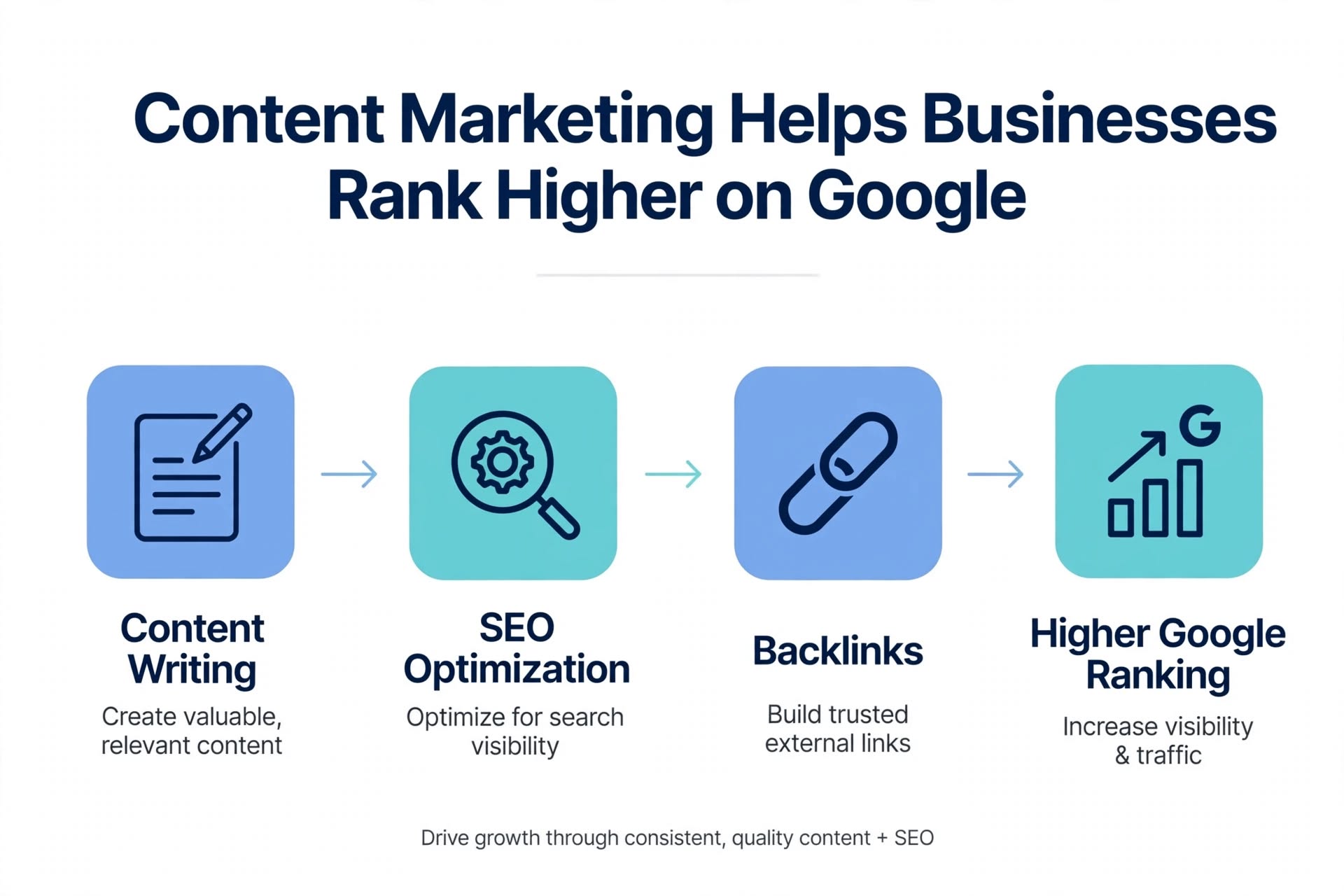
Content marketing helps businesses rank higher on Google by matching what people search for, earning trust, attracting backlinks, and delivering a better experience. It isn't an overnight fix, since SEO results usually take time to build. But unlike paid ads, good content keeps working long after it's published. Start with keyword research, create genuinely helpful content, stay consistent, and keep improving based on your data. Do that, and your website can become a steady source of traffic, leads, and growth.