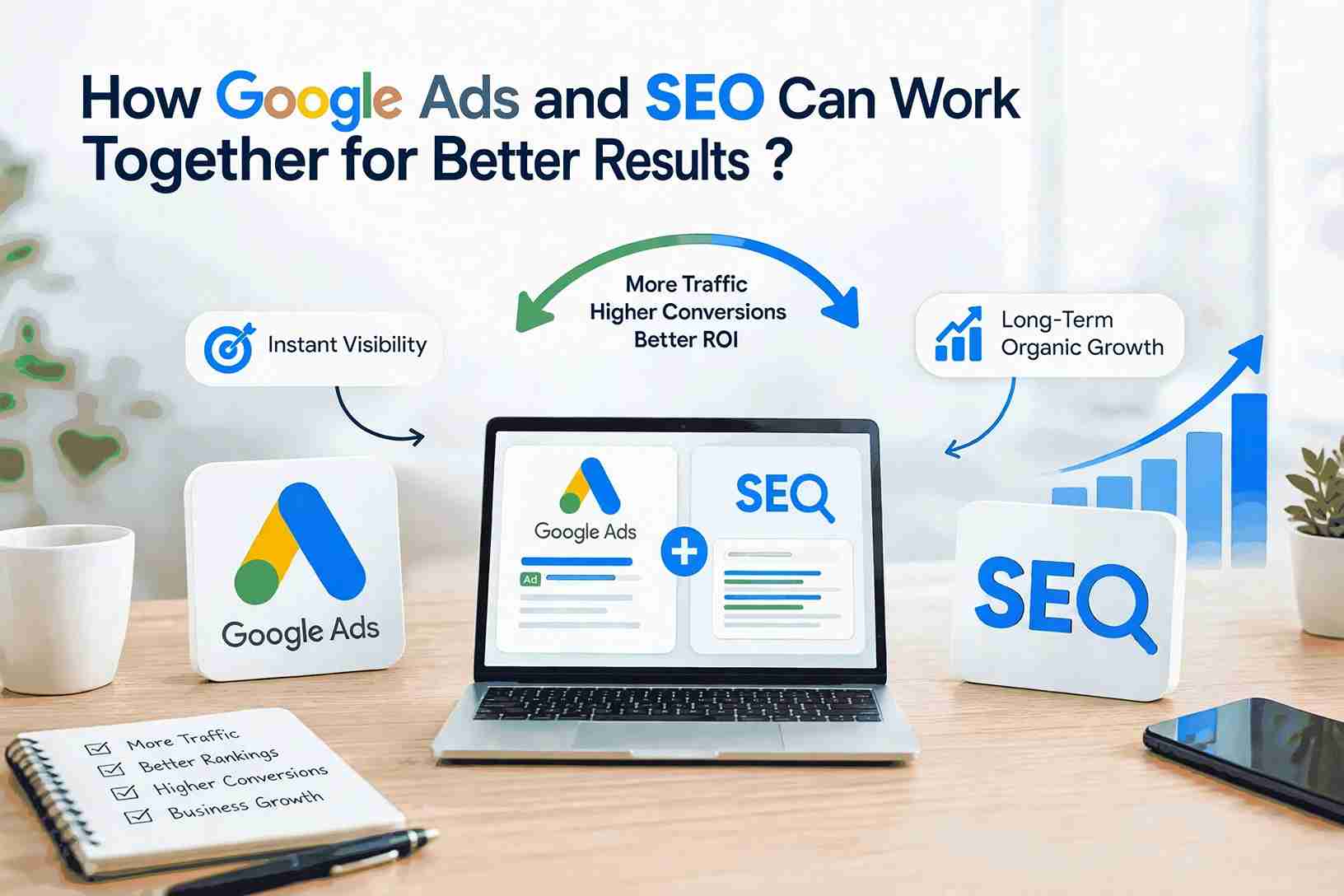
Many businesses treat Google Ads and SEO as rivals competing for the same budget. One promises instant visibility, the other promises long-term growth, so teams often pick a side and stick to it. The smartest marketers know better: when the two channels work together, each makes the other stronger.
Here is how combining paid and organic search can help you capture more traffic, learn faster, and get more value from every marketing rupee or dollar.
Understanding the Difference
Google Ads (also called PPC or paid search) places your ads at the top of the results page. You pay per click, and results begin almost immediately. SEO earns organic rankings through quality content, technical health, and authority. It takes longer, but traffic keeps flowing without paying for each visit.
Paid search is fast and controllable. SEO is slower but compounds over time. Together, they cover both the short and long game.
1. Dominate More of the Search Results Page
When your brand appears in both a paid ad and an organic listing for the same search, you occupy more space and signal credibility. Searchers see you repeatedly, which builds familiarity and trust. Studies on search behavior consistently suggest that a strong presence across both result types can lift overall clicks compared with appearing in just one.
This matters most for competitive keywords, where rivals are fighting for attention. Owning two spots instead of one leaves less room for them.
2. Use Paid Data to Sharpen Your SEO Strategy
Organic keyword research involves a lot of guesswork, and rankings can take months to confirm whether a keyword is worth targeting. Google Ads gives you answers quickly. By running ads on a set of keywords, you can see which terms bring clicks, which convert, and which only attract browsers.
Use this data to decide which keywords deserve long-term SEO investment. If a phrase converts well in paid campaigns, build or improve a dedicated page to rank for it organically.
3. Test Messaging Before You Commit to Content
Ad headlines and descriptions are essentially rapid-fire A/B tests. You can quickly learn which benefits, offers, and calls to action resonate most with your audience. Apply those insights to your organic title tags, meta descriptions, and page copy so your listings attract more clicks without paying for each one.
4. Fill the Gaps While SEO Builds Momentum
A new page or website can take months to climb the rankings. During that time, Google Ads can capture demand immediately. It is also useful for:
- New product launches where you need visibility from day one.
- Seasonal campaigns that do not leave time for organic ranking.
- Keywords that are too competitive for SEO to win in the short term.
As your organic rankings improve, you can reduce spending on terms where you now rank well and redirect that budget to new opportunities.
5. Improve Landing Pages for Both Channels
Strong landing pages benefit paid and organic traffic alike. Google Ads rewards relevant, fast, easy-to-use pages with higher Quality Scores, which can lower your cost per click. SEO rewards the same qualities with better rankings.
Focus on clear headlines, fast load times, mobile-friendly design, and a simple path to conversion. One improvement helps both channels, so your effort works twice as hard.
6. Strengthen Remarketing and Audience Building
Not every visitor converts on the first visit. Organic traffic from blog posts and guides lets you build audiences that Google Ads can then retarget with tailored offers. Someone who reads your SEO article on a topic is a warm prospect for a related ad later. This turns content traffic into a measurable pipeline.
7. Get a More Complete View of Performance
When you analyze paid and organic data side by side, patterns emerge. You may find that a keyword where you rank first organically does not need heavy ad spend, or that a high-converting paid term has no organic page at all. Connecting Google Ads, Google Analytics, and Google Search Console reveals these opportunities and helps you allocate budget with confidence.
Practical Tips to Make Both Channels Work Together
- Share keyword insights between your PPC and SEO teams regularly.
- Review the Search Terms report in Google Ads for new keyword and content ideas.
- Check organic rankings before bidding and reduce spend where you already rank at the top and convert well.
- Align messaging so ads, titles, and landing pages tell one consistent story.
- Track assisted conversions to see how each channel contributes across the customer journey.
Final Thoughts
Google Ads and SEO are not competitors. They are complementary tools that solve different problems. Paid search delivers speed, precision, and data. SEO delivers sustainability, trust, and lower long-term costs.
When you let each channel inform the other, you gain broader visibility, smarter budgeting, and better conversion rates. Start by sharing data between the two, fix your landing pages, and review performance together. The results will be well worth the effort.