In today's hyper-competitive digital landscape, businesses can no longer afford to rely on guesswork when it comes to marketing. Every rupee, dollar, or pound spent needs to be justified with measurable outcomes. This is exactly where performance marketing steps in. Unlike traditional marketing, which often focuses on brand awareness with delayed or unclear returns, performance marketing is built entirely around accountability, measurable results, and return on investment (ROI). Whether you run a small startup or a large enterprise, adopting a performance marketing strategy is no longer optional — it's a necessity for sustainable growth.
What Is Performance Marketing?
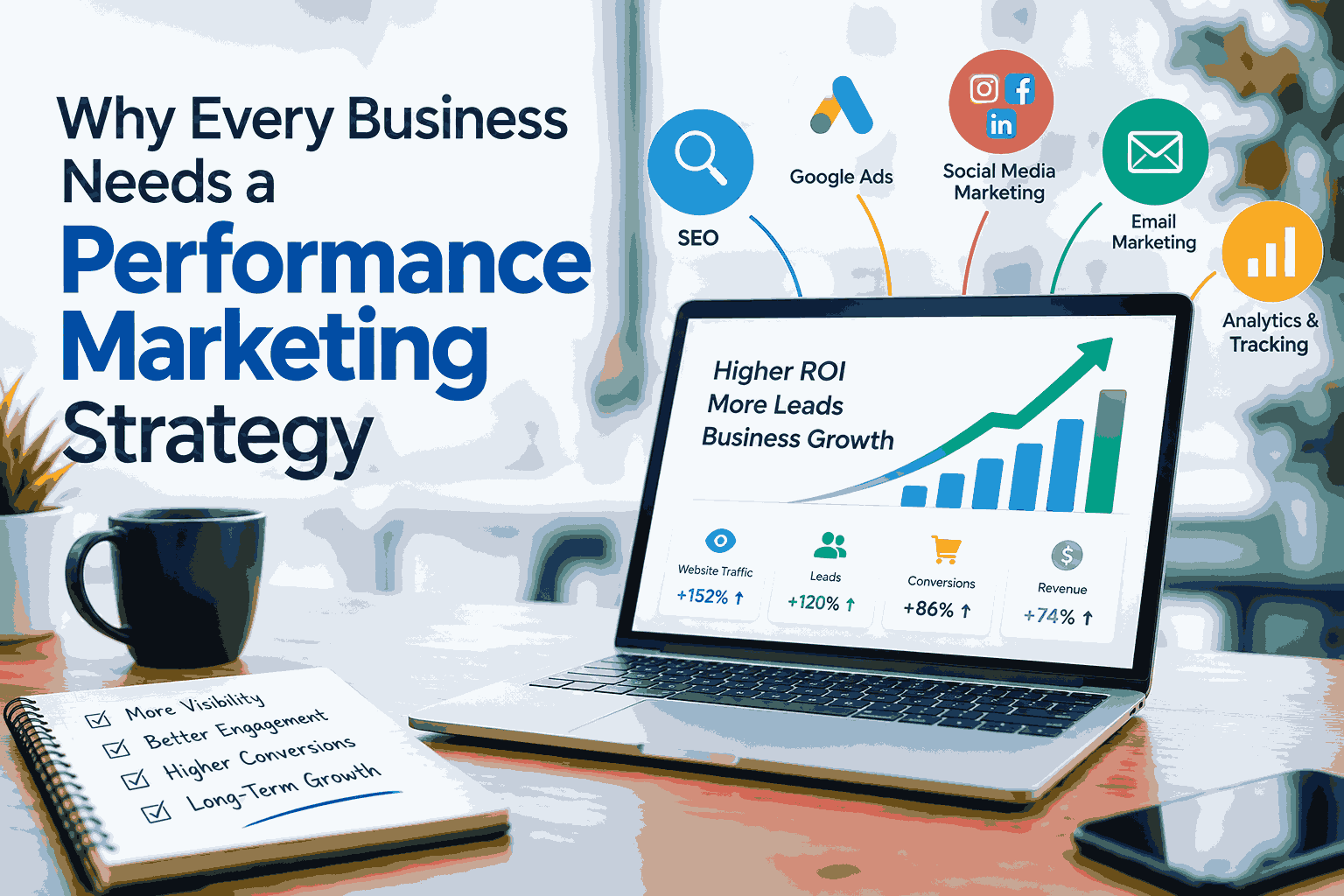
Performance marketing is a results-driven approach to digital advertising where businesses pay only when a specific action is completed — such as a click, lead, sale, or app install. It spans channels like pay-per-click (PPC) advertising, social media ads, affiliate marketing, search engine marketing (SEM), and influencer partnerships. The defining feature of performance marketing is that every campaign is tracked, measured, and optimized in real time, giving businesses full visibility into what's working and what isn't.
1. Measurable Results and Clear ROI
One of the biggest advantages of performance marketing is transparency. Businesses can track exactly how many leads, sales, or conversions a campaign generates, and at what cost. This level of measurement allows marketing teams to calculate ROI precisely and make informed budget decisions, rather than relying on vague metrics like impressions or reach alone.
2. Efficient Use of Marketing Budgets
With performance marketing, businesses only pay for actual results, whether that's a click, a lead, or a completed sale. This pay-for-performance model minimizes wasted spend and ensures marketing budgets are directed toward strategies that actually deliver value. For small and medium-sized businesses with limited budgets, this efficiency can be a game-changer.
3. Real-Time Optimization
Traditional marketing campaigns, such as television or print ads, are difficult to adjust once launched. Performance marketing, on the other hand, thrives on real-time data. Marketers can monitor campaign performance daily, or even hourly, and make quick adjustments to targeting, creatives, or bidding strategies to improve results continuously.
4. Highly Targeted Audience Reach
Performance marketing platforms like Google Ads, Meta Ads, and LinkedIn Ads offer advanced targeting capabilities based on demographics, interests, behavior, and even purchase intent. This precision ensures that marketing messages reach the right people at the right time, significantly increasing the likelihood of conversion compared to broad, untargeted campaigns.
5. Scalability Based on Performance
A major benefit of performance marketing is scalability. If a campaign is performing well, businesses can quickly increase their budget to scale results. Conversely, if a campaign underperforms, spending can be reduced or reallocated immediately. This flexibility allows businesses to grow their marketing efforts in direct proportion to actual returns, rather than committing to fixed, long-term spending.
6. Data-Driven Decision Making
Performance marketing generates a wealth of data — click-through rates, conversion rates, cost per acquisition, and customer lifetime value, among others. This data empowers businesses to make strategic decisions not just about marketing, but also about product development, pricing, and customer experience. Over time, this creates a feedback loop that continuously improves overall business performance.
7. Staying Competitive in a Digital-First World
Consumers today research products online, compare prices, and read reviews before making a purchase decision. Businesses that fail to establish a strong, measurable digital presence risk losing market share to competitors who do. A well-executed performance marketing strategy ensures your brand remains visible and competitive across search engines, social media, and other digital touchpoints where your customers are actively searching.
Common Performance Marketing Channels
- Search Engine Marketing (SEM) — Paid search ads on Google and Bing
- Social Media Advertising — Facebook, Instagram, LinkedIn, and TikTok ads
- Affiliate Marketing — Partnering with affiliates who earn commission on sales
- Native Advertising — Sponsored content that blends with platform content
- Email Marketing Automation — Triggered, personalized campaigns based on user behavior
- Influencer Marketing — Performance-based collaborations with measurable outcomes
How to Build an Effective Performance Marketing Strategy
Building a successful performance marketing strategy starts with setting clear, measurable goals — whether that's lead generation, sales, or app downloads. From there, businesses should identify the right channels based on where their target audience spends time, set up proper tracking and analytics tools, and continuously test and optimize creatives, audiences, and bidding strategies. Regular reporting and analysis are essential to ensure the strategy stays aligned with business objectives and delivers consistent ROI.
Conclusion
Performance marketing has transformed the way businesses approach advertising by prioritizing accountability, efficiency, and measurable outcomes over guesswork. In an environment where every marketing dollar counts, businesses that embrace a performance-driven strategy gain a significant competitive advantage — turning marketing from a cost center into a predictable growth engine. Whether you're a startup looking to scale quickly or an established enterprise aiming to maximize efficiency, a robust performance marketing strategy is no longer just an option — it's a fundamental requirement for long-term success in today's digital economy.